partners
Partners that enable transformation
We collaborate with global technology leaders to deliver robust, secure, and governed Artificial Intelligence solutions, ready for complex business environments.

Palantir Partner
The partnership between Volis and Palantir combines deep expertise in data engineering, data science, and transformation management with a leading data and AI platform. In this way, we help organizations unify critical data, accelerate decision-making, and transform strategy into operational execution, with measurable impact.
GET TO KNOW





Available now on the AWS Marketplace
The fastest and safest way to get started is now within your reach. Our services are officially available on the AWS Marketplace, ready to be integrated into your cloud environment.
Simplify adoption, reduce implementation time, and start making an impact from day one. Click the button below and take the next step with complete confidence.
PALANTIR AIP
Secure operational layer for AI and human collaboration
The AIP platform enables AI to run in mission-critical environments, ensuring security, human oversight, and full integration with corporate data.


PALANTIR ONTOLOGY
Ontology is the center of everything
The AIP Ontology acts as an operational layer that integrates data, analytical models, and business logic into a coherent framework, a living system that represents the organization's entities, relationships, events, and processes.
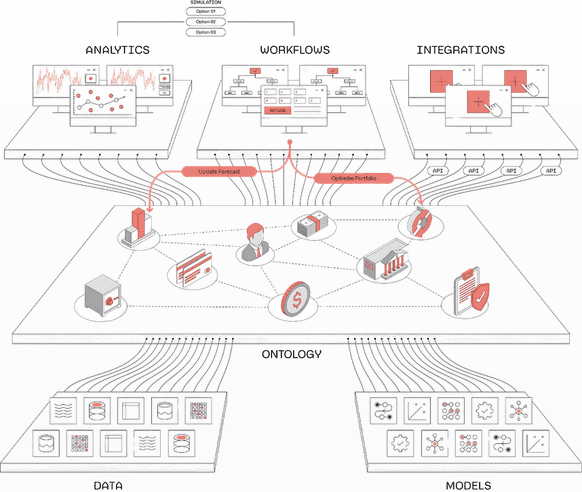
These elements constitute a reusable asset that allows for modeling operations, predicting behaviors, and orchestrating decisions consistently throughout the organization.
Capabilities that the Ontology Allows to Implement
Result: a governed, auditable, and scalable operating environment that supports mission-critical applications and complex automations.
Data Governance and Auditing
Systems with Artificial Intelligence
Process Automation
Operational Optimization
PRACTICAL USE
Use cases with Palantir Ontology and AIP
Challenge
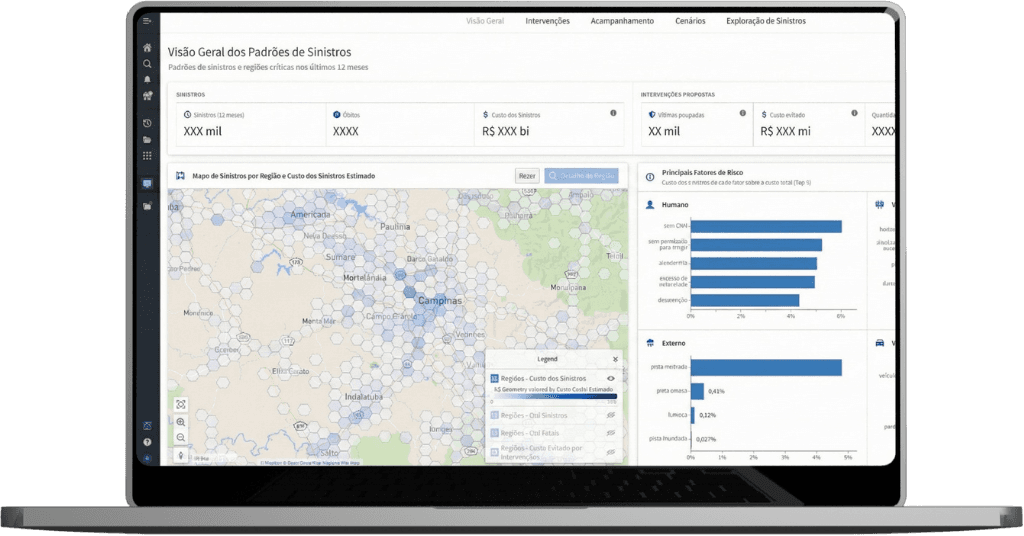
Road safety management relied on static reports and the manual analysis of large volumes of police reports, which hindered the rapid identification of risk patterns and the root causes of traffic incidents. The absence of an integrated system connecting accident data to budgetary planning for interventions made prioritizing works based on evidence a time-consuming process, limiting the agency's ability to proactively reduce traffic fatalities and optimize the allocation of public resources.
Solution
A prescriptive road safety system that uses Artificial Intelligence to process and extract structured data from police reports, enabling the automatic identification of human, road, and vehicle risk factors. Through an ontology-based architecture, the solution correlates incidents to critical areas and suggests customized engineering and enforcement interventions, calculating the potential for lives saved and the return on investment (ROI) of each action. The platform includes a management pipeline that tracks everything from technical feasibility to post-implementation results measurement, transforming raw data into a continuous cycle of public safety improvement.
Challenge
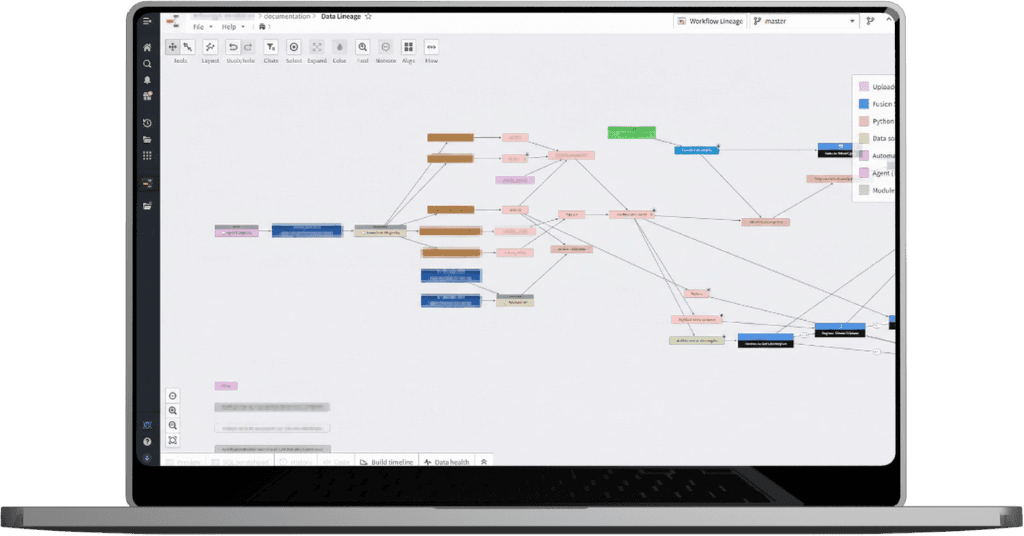
Managing complex engineering portfolios faced the challenge of fragmented financial, operational, and human capital data. The lack of an integrated view made it difficult to compare budget planning with the actual costs of each project in real time. Additionally, the selection of subcontractors and the formation of technical teams were processes based on ad hoc decisions, without the support of historical performance metrics that would allow for the identification of the most suitable partners and professionals for each new project.
Solution
A digital ecosystem supporting decision-making is structured around three strategic pillars: financial control, supplier intelligence, and skills management. The solution allows for detailed (deep dive) analyses of the profitability of each project and uses algorithms to recommend the most suitable subcontractors based on cost and performance history. Additionally, a talent management system optimizes team building, ensuring that each project has the ideal technical profiles, resulting in greater operational efficiency and financial predictability.
Challenge
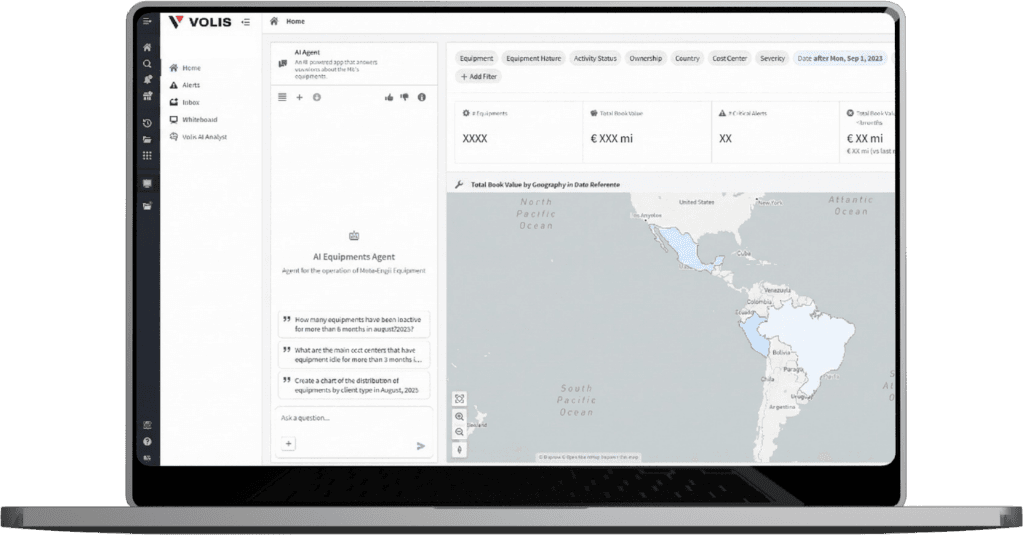
The organization had a centralized platform of strategic dashboards for monitoring indicators, but the solution was limited to passive data visualization, requiring leadership to "hunt" for information in charts without support for direct interactivity. There was an inability to ask complex questions in natural language or to receive proactive alerts about critical business deviations. Specifically in fleet management, high-value assets remained inactive in projects for extended periods without any priority signaling to management, resulting in profitability losses due to a lack of visibility for immediate intervention.
Solution
An intelligent management application that transformed the visualization model into a dynamic, decision- and execution-oriented system. The solution integrates Artificial Intelligence (LLM), allowing managers to consult asset inventory and performance through direct questions in natural language, obtaining instant answers about the operational status. Simultaneously, an intelligent severity-based alert system was implemented, automatically identifying idle assets with a high monetary impact. The platform now allows for immediate action within the interface itself, enabling the assignment of responsibilities, the setting of deadlines, and the tracking of historical resolution records, closing the loop between problem identification and improvement implementation.